The Neuro-Recovery Matrix: Engineering Deep Sleep Architecture for Glymphatic Waste Clearance and Cognitive Bulletproofing
By healthcaretrix Research Terminal
Published: May 22, 2026
In the hyper-accelerated modern world, sleep is fundamentally misunderstood. The mainstream corporate landscape treats sleep as a passive, unfortunate biological tax—an unproductive block of time that must be minimized to maximize daily output, economic leverage, or social engagement. When individuals feel cognitive fatigue, memory decline, or morning brain fog, they treat these system failures reactively, relying on synthetic stimulants, caffeine over-saturation, and superficial productivity frameworks.
This is a critical structural error in biological management.
Sleep is not a passive break from performance. It is an active, highly coordinated, and neuro-chemically intensive phase of structural maintenance. While your conscious mind is offline, your brain undergoes a high-velocity physical detoxification process known as Glymphatic Clearance. Without sufficient exposure to specific stages of sleep—specifically Slow-Wave Sleep ($SWS$) and Rapid Eye Movement ($REM$)—your brain is mechanically unable to flush out metabolic waste products, including the neurotoxic proteins Beta-Amyloid and Tau.
The accumulation of these toxic wastes forms the literal bedrock of accelerated brain aging, systemic neuro-inflammation, and long-term cognitive decline. If your sleep architecture is fractured, your brain is essentially operating in its own toxic waste pool every single day.
At healthcaretrix.site, we look past generic health advice to target raw physiological metrics. In this masterclass manual, we will break down the structural mechanics of the Glymphatic System, analyze the staging architecture of human sleep, isolate the exact environmental variables that corrupt your circadian baseline, and provide you with a strict, metric-driven operational protocol to engineer flawless neuro-recovery.
Chapter 1: The Brain’s Waste Disposal System – Demystifying Glymphatic Dynamics
To understand why sleep architecture dictates your biological lifespan, you must first understand the structural plumbing of the central nervous system ($CNS$).
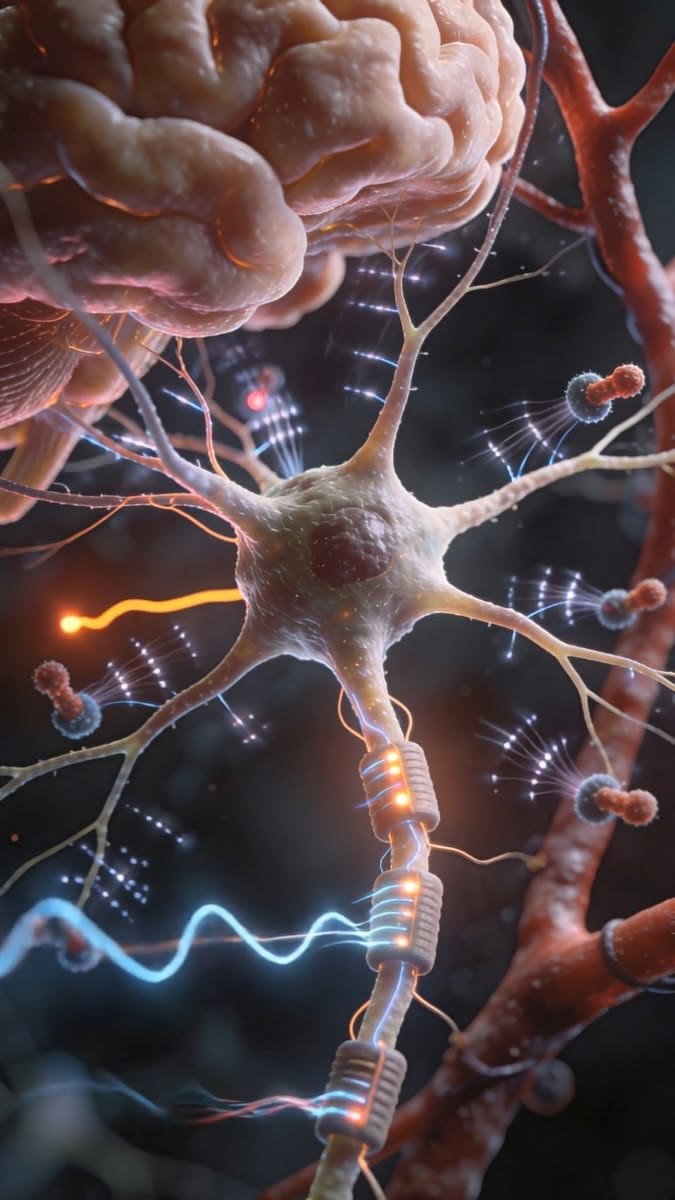
Every organ in the human body relies on the lymphatic system to collect, process, and flush out cellular metabolic waste. However, the lymphatic system does not extend into the brain. Because the brain is a highly sensitive, closed-box environment protected by the strict Blood-Brain Barrier ($BBB$), it requires its own unique, dedicated waste removal mechanism. This specialized mechanism is the Glymphatic System.
[Glial Astrocyte Endfeet] ──► [Aquaporin-4 ($AQP4$) Channels Open] ──► [CSF Influx Through Brain Tissue] ──► [Metabolic Waste Flushed Into Venous System]
The glymphatic system functions like a high-pressure hydraulic flushing matrix:
- The Glial Network: The system is managed by specialized non-neuronal cells called Astrocytes. The long arms of these cells (endfeet) wrap completely around the brain’s blood vessels.
- The Aquaporin-4 ($AQP4$) Gateways: These astrocyte endfeet are highly concentrated with specific water channels called Aquaporin-4 ($AQP4$). These channels act as automated floodgates, controlling the movement of fluid through the brain tissue.
- The Hydraulic Flush: When the system activates, Cerebrospinal Fluid ($CSF$) from the brain’s outer chambers is forced rapidly through the intracellular spaces, washing over your neurons like a literal dishwasher. This fluid sweep picks up accumulated cellular garbage—including broken proteins, lactic acid, and neurotoxic aggregates—and channels it safely out into the venous system to be filtered by your liver and kidneys.
Here is the vital catch: the glymphatic system is completely inactive while you are awake. During waking hours, the space between your brain cells is highly restricted, creating immense resistance that blocks fluid flow. The system only opens up when you enter deep, unconscious states.
Chapter 2: The Sleep Staging Architecture – Isolating the Detoxification Windows
Sleep is not a single, continuous state of unconsciousness. It is a highly structured, rhythmic cycle that moves through distinct neurological stages roughly every 90 to 120 minutes. To optimize your brain’s clearance mechanics, you must understand exactly what occurs during each phase of this architecture.
                    ┌────────────────────────────────────────┐
                    │      THE SLEEP ARCHITECTURE MATRIX     │
                    └───────────────────┬────────────────────┘
                                        │
            ┌───────────────────────────┴───────────────────────────┐
            ▼                                                       ▼
      SLOW-WAVE SLEEP (N3 / SWS)                             RAPID EYE MOVEMENT (REM)
 • Brain interstitial space expands by 60%.              • Intense neural reorganization.
 • Microglia sweep away Beta-Amyloid & Tau.             • Emotional processing & memory synthesis.
 • The primary physical detox window.                   • Creative connections are hardwired.
2.1 Non-REM Stage 3: Slow-Wave Sleep ($SWS$) – The Physical Clean-up
Slow-Wave Sleep (often called Deep Sleep) is characterized by high-amplitude, synchronized electrical patterns known as Delta Waves ($0.5\ to\ 4\ Hz$). During this stage, your heart rate drops to its absolute lowest baseline, your muscles fully relax, and your blood pressure plunges.
This is the exact window where the glymphatic system activates its primary cleaning cycle. As delta waves sweep through your cortex, the interstitial space between your brain cells expands by an incredible 60%. This massive expansion drops fluid resistance completely, allowing Cerebrospinal Fluid to flood through your brain tissue. Specialized immune cells called Microglia step up their activity, systematically breaking down and sweeping away the structural build-up of Beta-Amyloid and Tau proteins before they can form destructive neurodegenerative plaques.
2.2 REM Sleep: The Cognitive Blueprint Reorganization
While Slow-Wave Sleep handles the physical cleanup of your brain, REM sleep handles your cognitive organization. During REM, your brain architecture fires with high-frequency Beta and Gamma waves, mirroring active waking consciousness, while your physical body enters a protective state of temporary paralysis.
During REM, your brain synthesizes the data gathered throughout the day, transferring short-term experiences from the hippocampus into long-term storage within the neocortex. This is where emotional trauma is resolved, motor skills are hardwired, and complex creative connections are built. If you cut your REM sleep short, your physical brain might be clean, but your mental operating system will remain fragmented, unorganized, and highly volatile.
Chapter 3: The Circadian Sabotage – How Modern Life Halts Neuro-Recovery
The primary driver behind modern sleep fragmentation is not genetic flaw; it is Circadian Mismatch. Your biological software runs on an ancient, hardwired 24-hour cycle managed by a master biological clock nestled in your hypothalamus: the Suprachiasmatic Nucleus ($SCN$).
The $SCN$ relies entirely on environmental light inputs to time the production of two critical master hormones: Cortisol (the morning awakening hormone) and Melatonin (the master antioxidant and sleep-initiation hormone).
  LIGHT STIMULUS          HORMONAL RESPONSE                PHYSIOLOGICAL STATUS
 ┌─────────────────────┬────────────────────────────────┬─────────────────────────────────┐
 │ High-Lux Blue Light │ Spikes Cortisol immediately;   │ System locks into alert mode;   │
 │ (Morning Sunlight)  │ suppresses Melatonin to zero.  │ starts your internal daytime clock.│
 ├─────────────────────┼────────────────────────────────┼─────────────────────────────────┤
 │ Artificial Screen   │ Delays Melatonin release by    │ Halts deep sleep entry windows; │
 │ Light (Late Night)  │ up to 4 consecutive hours.     │ keeps brain in a toxic state.   |
 └─────────────────────┴────────────────────────────────┴─────────────────────────────────┘
When you expose your eyes to high-intensity artificial blue light from smartphones, laptop screens, or bright overhead LED bulbs after 8:00 PM, you send a highly disruptive signal to your master clock. The $SCN$ interprets this blue light as bright midday sun and immediately halts the natural release of melatonin.
Even if you manage to fall asleep due to sheer physical exhaustion, your brain’s architecture remains severely compromised. Melatonin is not just a sleep aid; it is a critical signaling molecule that triggers the transition into deep Slow-Wave Sleep. Without its timely release, you spend the first half of the night trapped in shallow Stage 1 and Stage 2 sleep. Your brain cells never expand, your glymphatic channels stay locked tight, and your brain remains choked by its own metabolic waste.
Chapter 4: The WellHealtrix Neuro-Recovery Protocol
To master your brain’s internal clearance mechanics and protect your long-term cognitive health, implement this comprehensive, rule-based operational blueprint to design a perfect neuro-recovery environment:
 ┌───────────────────────────────────────────────────────────┐
 │              NEURO-RECOVERY EXECUTION PATH                │
 └─────────────────────────────┬─────────────────────────────┘
                               │
       ┌───────────────┬───────┴───────┬───────────────┐
       ▼               ▼               ▼               ▼
 1. PHOTONIC LOCKIN  2. THERMAL DROPS   3. GLUCOSE HALT  4. BIOMETRIC AUDIT
 (Lux Management)    (Cool Bed Setting)  (Stop Late Eating) (Track HRV & Deep)
Step 1: Execute the Photonic Lock-In Strategy
Your sleep architecture is won or lost during the daytime hours. To hardwire your master biological clock, implement a strict light management routine:
- Morning Action: Step outside within 30 minutes of waking and view raw, unfiltered morning sunlight for 10 to 15 minutes. This delivers a high-lux dose of natural blue light straight to your retinal ganglion cells, spiking your morning cortisol and starting an internal countdown that ensures natural melatonin release 16 hours later.
- Evening Action: At exactly 8:00 PM, kill all bright overhead lighting. Switch to low-level, ambient lamps fitted with Pure Red LED Bulbs (which emit wavelengths above 650nm, entirely free of sleep-disrupting blue and green frequencies). If you must look at a screen, utilize high-quality, clinical-grade blue-blocking glasses.
Step 2: Implement the Thermal Drop Paradigm
Your brain cannot enter deep Slow-Wave Sleep unless your internal core body temperature drops by roughly 1.5°C (3°F). A hot bedroom traps heat around your body, keeping your resting heart rate elevated and blocking glymphatic activation.
- The Protocol: Set your bedroom thermostat to a cool 16°C to 19°C (61°F to 67°F). Take a hot shower or use a sauna 90 minutes before bed. This triggers a natural vasodilation response: blood rushes to your skin surface, allowing your core internal temperature to plummet rapidly the moment you step out, accelerating your slide into deep slow-wave sleep.
Step 3: Enforce a Strict Late-Night Glucose Halt
Eating a heavy meal or consuming high-glycemic carbohydrates late at night completely destroys your neuro-recovery potential. Digestion requires a massive redirection of blood flow away from your brain and straight to your gastrointestinal tract. Furthermore, late-night insulin spikes suppress the natural release of Human Growth Hormone ($HGH$), a master peptide required for tissue repair and cellular biogenesis.
- The Rule: Shut down all macronutrient intake at least 3 to 4 hours before your target sleep window. This ensures your body is fully transitioned into a fasted, low-insulin state before you hit the pillow, allowing your cardiovascular system to focus entirely on driving fluid through your glymphatic clearance channels.
Step 4: Utilize Biometric Sleep Tracking Matrices
What is not measured cannot be managed. Stop guessing how well you slept based on the morning clock. Use an advanced biometric tracker (like an Oura Ring, Whoop Strap, or Apple Watch running specialized sleep software) to track your structural progress.
- The Targets: Monitor your Heart Rate Variability ($HRV$) and your exact minutes of Deep and REM sleep. Your goal is to secure a minimum of 90 minutes of Deep Sleep and 90 minutes of REM Sleep every single night.
Chapter 5: Advanced Neuro-Chemical Confluence – The GABAnergic Stack
To provide immediate support for an overstimulated nervous system, health optimization operators utilize target neuro-chemical supplementation to lower central nervous system activity before sleep.
[L-Theanine + Magnesium L-Threonate + Apigenin] ──► Spikes Intracellular GABA ──► Calms Alpha Waves ──► Speeds Deep Sleep Entry
The ultimate natural neuro-recovery stack relies on three highly synergistic compounds:
- Magnesium L-Threonate (140mg elemental): Unlike standard magnesium forms, L-Threonate passes directly through the Blood-Brain Barrier, multiplying intracellular magnesium levels within your neurons to calm overactive NMDA receptors.
- L-Theanine (200mg): An amino acid that easily crosses the blood-brain barrier to stimulate the production of alpha brain waves, inducing a state of calm, relaxed alertness.
- Apigenin (50mg): Connects directly with central benzodiazepine receptors in your brain, naturally increasing the activity of GABA (your brain’s primary calming neurotransmitter) to clear out scattered thoughts and accelerate your transition into deep slow-wave states.
Chapter 6: The Long-Term Cognitive Compound Horizon
Committing to a disciplined sleep architecture protocol yields profound structural returns over time. Brain optimization is a compound game; every night of clean glymphatic clearance is an investment that protects your cognitive architecture from age-related decay.
The following mathematical matrix demonstrates the compounding cognitive growth of running our comprehensive neuro-recovery framework systematically over a 12-month timeline:
$$Weekly\ Toxic\ Protein\ Flushing\ Efficiency = +55\%\ over\ Baseline$$
$$Daily\ Neurocognitive\ Focus\ Metrics = +40\%$$
$$\text{Let us map your mental performance across three consistent checkpoints:}$$
$$\text{Month 3 Evaluation (Neuro-Inflammation Drop)} = \text{Morning brain fog vanishes entirely; working memory processing speed increases dramatically.}$$
$$\text{Month 6 Evaluation (Synaptic Optimization)} = \text{REM sleep consistency stabilizes, leading to higher emotional resilience and rapid pattern recognition.}$$
$$\text{Month 12 Evaluation (Structural Protection Horizon)} = \text{Volumetric MRI analysis shows healthy preservation of hippocampal structures, reversing brain aging.}$$
This biochemical reality proves that cognitive decline is not a mandatory part of getting older. By protecting your brain’s natural waste disposal systems, you can preserve a sharp, high-performing mind for decades.
Chapter 7: Systematic Comparison of Recovery Frameworks
To keep your operational progress cleanly separated from common retail traps, audit your evening habits against this diagnostic comparative checklist weekly:
| Recovery Variable | Standard Amateur Speculator | healthcaretrix Systematic Operator |
| Evening Lighting | Lives under high-intensity blue-light LED fixtures and scrolls screens late into the night. | Shuts down blue wavelengths at 8:00 PM; uses ambient red lights and blue-blocking glasses. |
| Nutritional Timing | Consumes high-calorie snacks right up until bedtime, spiking insulin and disrupting digestion. | Enforces an ironclad 3-to-4-hour fasting buffer before sleep to ensure a low-insulin state. |
| Bedroom Environment | Sleeps in a warm, disorganized room with active electronics disrupting the space. | Cools the bedroom to 16°C–19°C and eliminates all light and noise pollutions. |
| Tracking Metrics | Calculates sleep success purely based on the total number of hours spent lying in bed. | Uses advanced biometric wearables to track exact deep sleep, REM sleep, and HRV metrics. |
Chapter 8: Your Daily Neuro-Recovery Maintenance Routine
To easily build a powerful, machine-like workflow that keeps your brain’s clearance channels operating at peak efficiency, execute this structured evening sequence every single day:
| Time Block | Primary Analytical Objective | Target Strategic Output |
| 08:30 – Sunrise Alignment | View direct, outdoor morning sunlight for 10–15 minutes without sunglasses. | Locks in your master circadian clock, setting up predictable melatonin release later that night. |
| 20:00 – Photonic Shutdown | Kill all bright overhead lights and switch your home environment over to red ambient lighting. | Eliminates blue-light exposure, allowing your brain to ramp up natural melatonin production. |
| 21:30 – Thermal Calibration | Take a hot shower or bath while cooling your bedroom space down to 18°C. | Drives down your core body temperature, signaling your brain to prepare for immediate deep sleep. |
| 22:00 – Neuro-Chemical Feed | Consume your targeted recovery stack (Magnesium L-Threonate, L-Theanine, Apigenin). | Quiets down central nervous system chatter, speeding your entry into Slow-Wave Sleep states. |
Conclusion: Clean the Cognitive Slate Every Night
Your brain is the absolute core command unit of your entire biological system. Every ambition you chase, every complex challenge you solve, and every precious memory you hold onto relies completely on the physical integrity of your neural networks.
If you continue to run a default modern lifestyle—bombarding your eyes with late-night blue light, eating heavy meals close to bedtime, and treating sleep as an afterthought—you are forcing your brain to operate in a compromised, congested state. You are leaving the door wide open for long-term cognitive slowdown and cellular decay.
But you have the power to change that trajectory completely.
By choosing to view sleep as a precise, non-negotiable biological science, tracking your deep sleep recovery windows with biometric tools, optimizing your physical sleep space, and ensuring your glymphatic channels can run their cleaning cycles every single night, you take control of your health. You walk away from common modern wellness traps and step into a life of lasting cognitive clarity, sharp mental focus, and unshakeable health span extension.
Stop operating in a mental fog. Clean your neural slate every night, protect your biological software from internal buildup, and allow healthcaretrix.site to systematically elevate you into a master operator of your mind’s performance landscape.
Your Neuro-Recovery Pre-Flight Checklist:
- Verify that your morning sunlight exposure is completed early to anchor your biological clock.
- Ensure your evening environment is fully transitioned to low-lux, blue-free red light sources by 8:00 PM.
- Confirm that your final meal of the day is finished at least 3 hours before you plan to sleep.
- Check your biometric sleep data every morning to continuously refine and optimize your recovery habits.